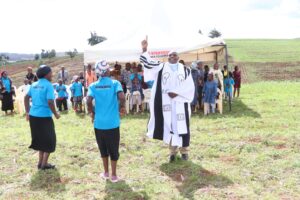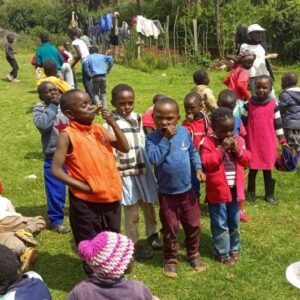
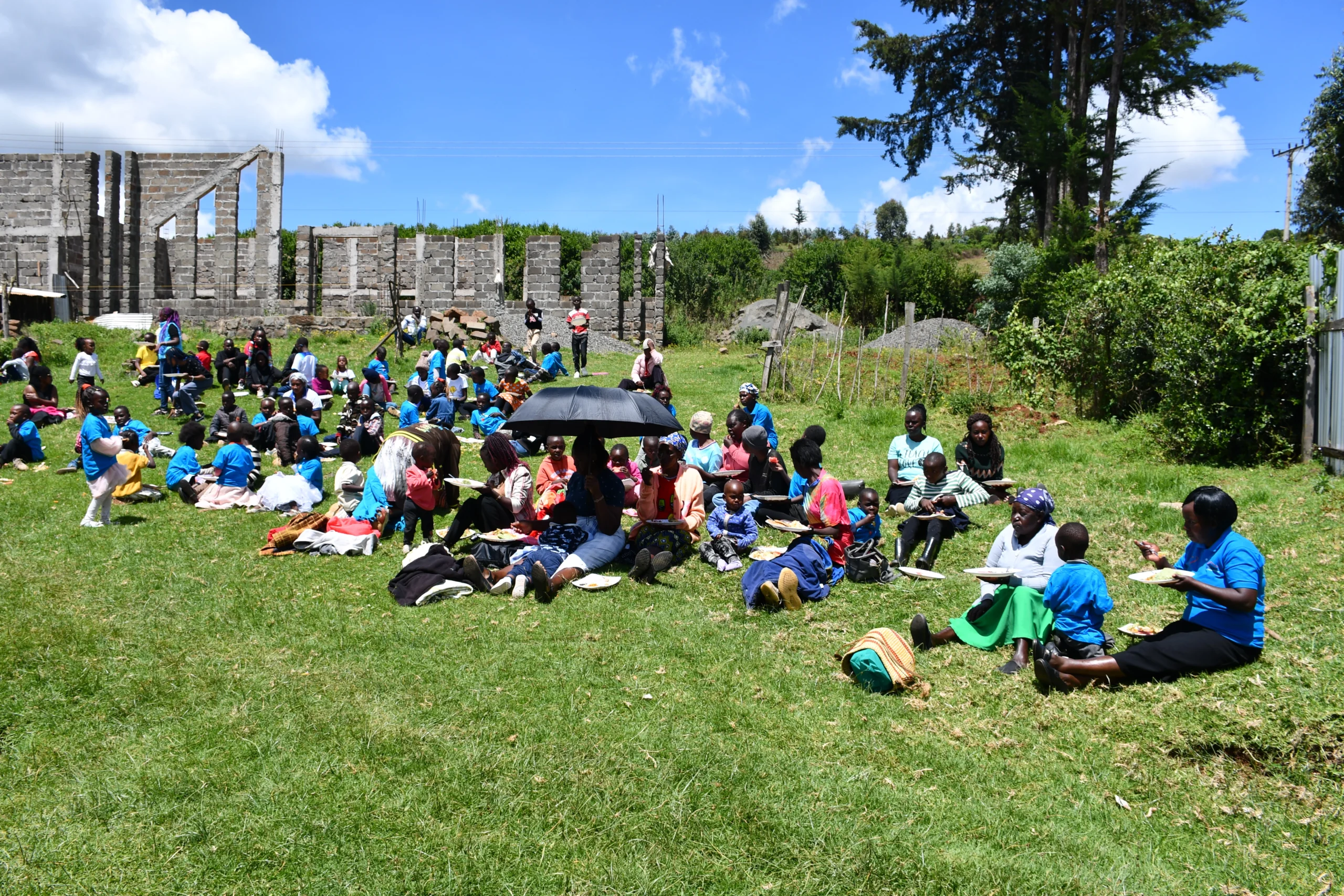

The carols started before the church was even full. Children who had been rehearsing for weeks were not waiting for a formal cue. By the time the rest of the community had settled into their seats on the evening of December 21, the Christmas and Vision Night was already well underway, driven entirely by the energy of 25 children who had been looking forward to this evening for a long time.
What followed was one of the most layered evenings in Manna House Kenya’s calendar year. It held, in the same few hours, the lightness of a proper children’s Christmas party and the weight of a community reflecting on its future.
The children received gifts. They sang. They sat down to a special meal and were, for one evening, simply children celebrating the end of a long school year. That portion of the night belonged to them completely, and it showed. The laughter in the room was not polite or performed. It was the real thing.
But as the evening moved into its second half, the tone shifted. The Manna House Kenya team led a reflection on the year that had passed. What had been built, what had been hard, and what the numbers actually showed. Twenty five children receiving consistent weekly meals and mentorship throughout the year. Families in Maina Village with a reliable food source during a period when reliability is not something most of them can take for granted. Volunteers and partners who sustained the work even in the months when the work was heavy.
Then came the vision.
The goal set for 2026 for Manna House Kenya was stated plainly: double the programme’s capacity and begin supporting 50 children in the Nyahururu community. Not a vague ambition. A specific number and a specific timeline. The people gathered that evening, supporters, partners, and community members, understood what the year ahead would ask of everyone who cared about this work.
In the weeks that followed, that vision started taking shape. New families were enrolled, additional food packages were planned, and the programme was restructured to hold 50 children instead of 25.
The children who joined the programme in 2026 were not in that church on December 21. They did not know that a room full of people was, in that moment, imagining a different year for them. That is how this kind of work operates. The decisions are made before the beneficiaries arrive. The table is set before anyone knows they are hungry.
By the end of the evening, the carols had finished, the gifts had been opened, and a community in Maina Village had looked at what it built in 2025 and agreed, collectively, that it was not finished. That is the quiet, unglamorous, entirely necessary thing that the Vision Night accomplished.
Twenty five children celebrated Christmas. Fifty children would begin the new year inside the programme. Both of those things happened because people showed up on December 21 and chose not to stop.