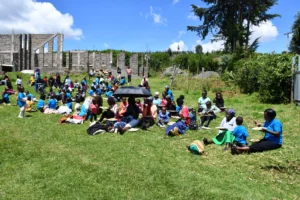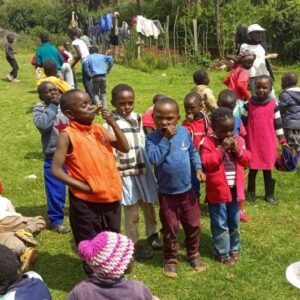
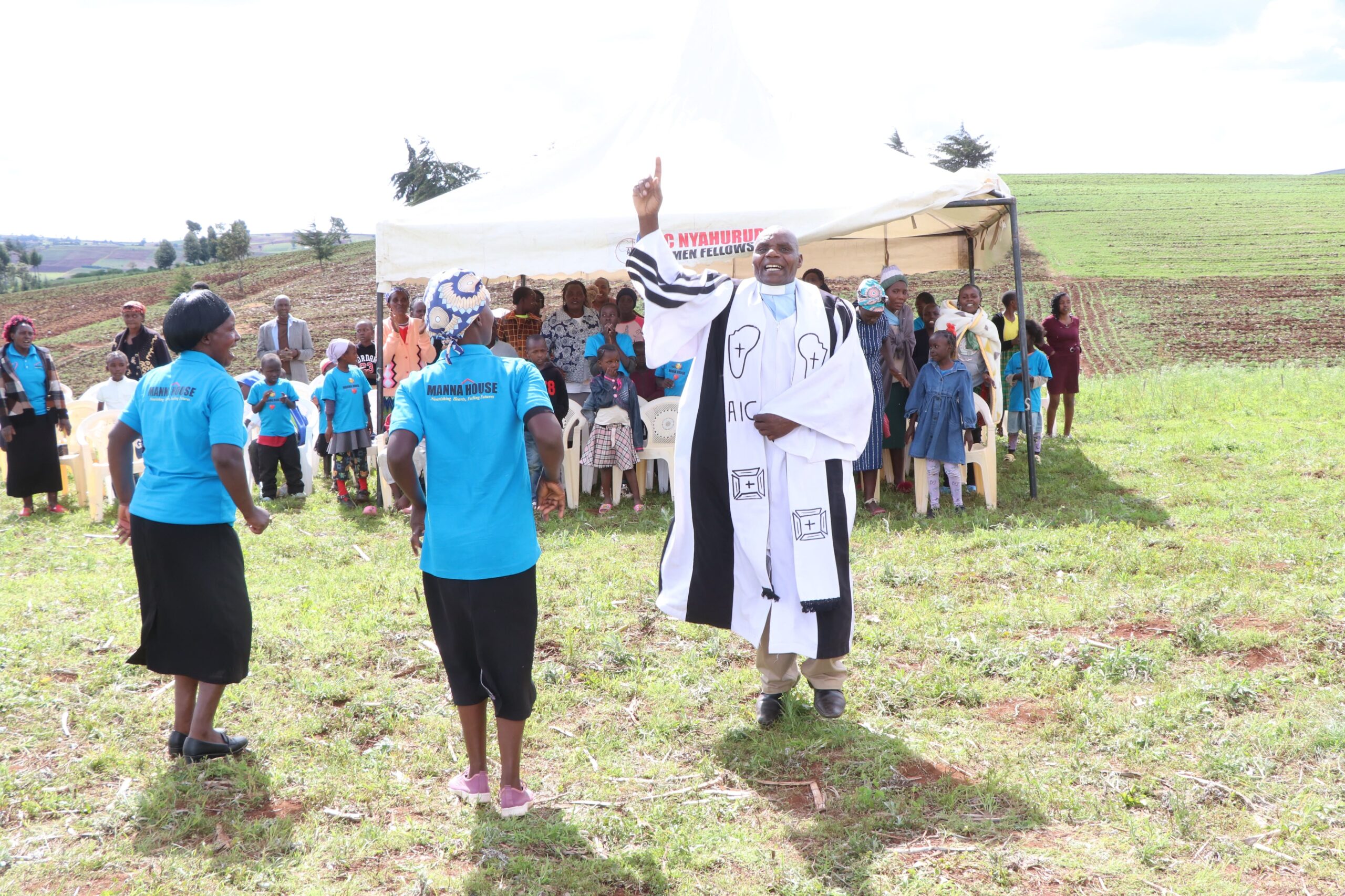

For most of the programme’s life, Manna House Kenya’s work happened in borrowed spaces. A corner of a church. A shared courtyard. Whatever was available and willing. The work itself was never small, but the physical reality of doing it without a dedicated home placed a ceiling on everything. On how many children could be reached, on what activities were possible, on what a typical day for a child in the programme could actually look like.
That ceiling came down when a partner donated a large parcel of land in Maina Village with no strings attached, only a belief that the children of Nyahururu deserved a place of their own.
The Manna House Refuge Place launched to mark that moment, and the community that gathered for the celebration understood what they were actually celebrating. Not just a piece of land. The removal of a constraint that had quietly limited this work for years.
The space that opened was built with a simple framework: a child needs to be safe, active, fed, and cared for as a whole person. The Refuge Place was designed around all four.
The playground gave children somewhere to use their bodies freely. This sounds like a small thing until you spend time in Maina Village and understand what the alternatives are. Open, safe play space is not readily available in many of the households the programme serves. A well-equipped playground, maintained specifically for these children, is not a luxury addition. It is a developmental necessity, and it was missing until now.
The open grounds created room for organised games, group activities, and the kind of structured physical engagement that builds both fitness and social confidence. Children who had been coming to the programme for meals were now staying longer, moving more, and forming the kinds of peer relationships that grow out of playing together rather than simply sitting together.
The feeding space gave the nourishment work a permanent home. Meals that had previously been prepared and distributed in improvised settings could now happen in a space built for the purpose. Consistent, dignified, and reliable. For children whose relationship with food has historically been shaped by scarcity, eating in a proper space carries meaning that goes beyond the nutritional value of the meal itself.
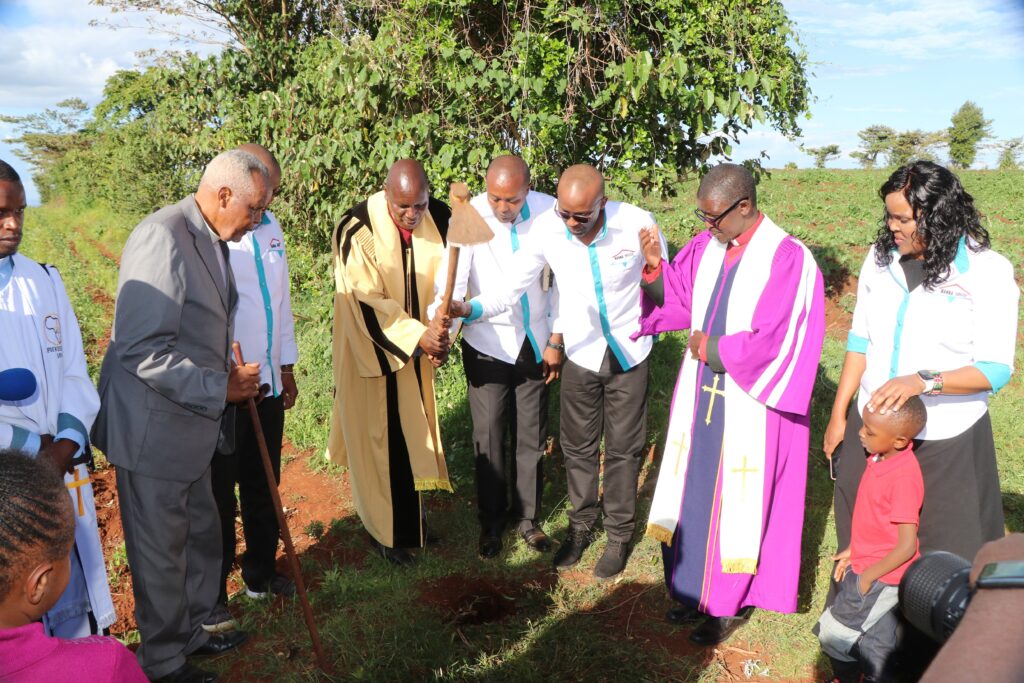
The provision for spiritual care and encouragement completed the picture. Manna House Kenya has always understood that the children it serves are not simply bodies that need feeding. They are young people navigating circumstances that would be hard for anyone, and they need to feel that someone sees them as full human beings with inner lives worth tending. The Refuge Place made space for that, literally and otherwise.
Since the launch, the difference has been visible. Children arrive at the Refuge Place and stay. The quality of engagement between the children and the programme’s mentors has deepened because there is now a space where those relationships can properly develop. The weekly rhythm of the programme has a home, and that consistency matters in the lives of children for whom consistency has not always been guaranteed.
The land was a gift. What was built on it was the work of an entire community that believed the gift was worth honouring. The Manna House Refuge Place is now that belief made physical, a place where children in Maina Village can grow, play, eat, and be known. A place that will still be standing when the children who play there today are grown, and when a new generation of children in Nyahururu needs somewhere to land.
It started with donated land. It became a sanctuary. That is what happens when people decide that a community’s children are worth the investment.